Contents
- How Wheatland Names Hurts, Habits, and Hang-ups
- Eight Principles Mapped onto Twelve Steps
- The Saturday Clock at Impact Ministries Church
- Shirley Keil and the Fellowship Hall Door
- A Year Measured in Saturday Evenings
How Wheatland Names Hurts, Habits, and Hang-ups
How does a faith-based 12-step framework reach the tangle of emotional trauma, chemical dependency, and the habits that keep both in place?
Celebrate Recovery answers with a structured, Christ-centered method. It merges a national Christ-centered support initiative with local group counseling at Impact Ministries Church in Wheatland, Wyoming. The program treats the whole life. Substance abuse sits inside a wider field of hurts, habits, and hang-ups.
Hurts, habits, and hang-ups.
That phrasing is the program's own scope language. The church runs the meeting that way. Outside directories classify it that way. The answer comes first because the method is already in motion on Saturday nights.
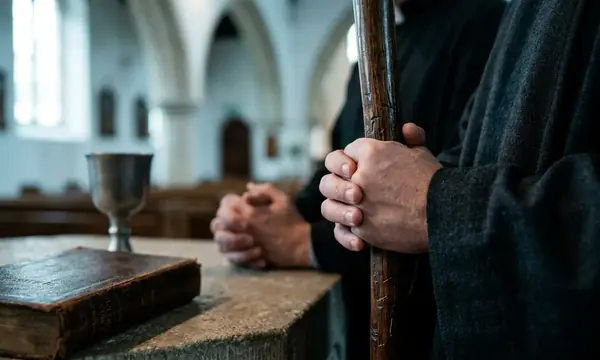
Paul the Apostle, writing in 1 Corinthians 12, pictured a body that needs every member. A recovery circle in Wheatland works from the same picture. One chair holds a marriage after addiction. The next chair holds a private grief that never touched a bottle. The curriculum was built to hold both.
Name the Wound
Walk in naming the actual fracture. The first honest sentence spoken from the chair is already inside the work, because the room was designed for the full range of hurts, habits, and hang-ups.
Eight Principles Mapped onto Twelve Steps
A newcomer usually asks a practical question. What will I actually do once I sit down?
The national curriculum pairs eight recovery principles, drawn from the Beatitudes, with the familiar twelve steps. A four-volume participant workbook carries the writing. Step-study groups typically run a full cycle over roughly 9 to 12 months. That is the progression path: listen, write, share, then write again.
Wyoming 211 files the Wheatland meeting under individual and group counseling. Drawing on that directory listing, the Saturday gathering sits in the counseling column as a peer resource for people who need a chair and a process.
The evening follows a fixed sequence.
- Large-group teaching or testimony opens the formal meeting.
- Gender-separated open-share groups follow.
- Individual sharing is usually held to a three-to-five-minute turn.
- Cross-talk, advice-giving, and interruption stay out of the circle.
The peer-supported room produces accountability without clinical jargon. People hear their own story in someone else's mouth. Then they keep the next small promise.
Congregations that host this work hear pastors and speakers such as Jeremy Haroldson in the same week they open a workbook. The advanced skill in the room is restraint. Holding a three-minute share without fixing the person next to you is how 1 Corinthians 12 becomes a practice rather than a reading.
Share, Then Stop
When your turn ends, stop. The no-cross-talk rule keeps the group from turning into a debate and keeps each member responsible for their own next step.
The Saturday Clock at Impact Ministries Church
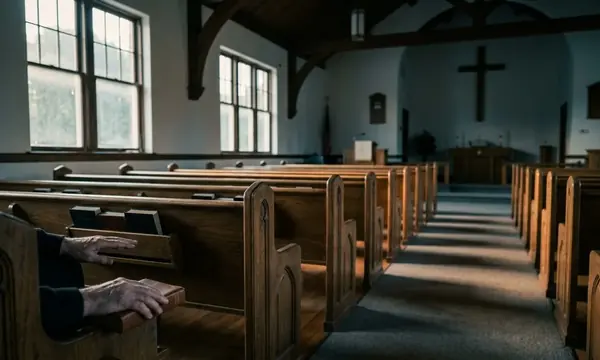
A first-time attender in Platte County often sits in the parking lot with the engine still running. The building is Impact Ministries Church. The clock says Saturday, 5:00 PM. Someone will hand them a plate before anyone hands them a workbook.
That meal is functional intake. The first half hour or so at a shared table lets a newcomer belong to the room before they belong to the process. Defenses drop when people pass food. Trust starts with a name—and a second helping.
Plenty of people in Wheatland know that parking-lot pause. The shared experience is the same. You walk toward light and folding chairs, and a person you may see at the grocery store on Tuesday makes space at the table.
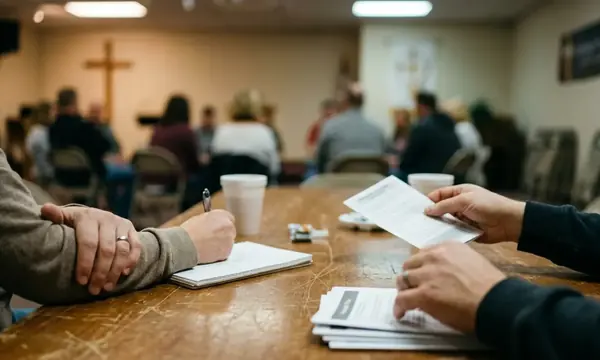
Then the evening turns. The structured 12-step portion follows the meal. Most attenders are back in their vehicles inside a window of roughly two to two and a half hours.
- Arrive for the 5:00 PM start and take a plate at the table.
- Stay through the shared mealtime, usually a little over half an hour.
- Move into about an hour of large-group teaching and open-share.
- Leave once the no-cross-talk block closes.
Break the evening into its two halves before evaluating anything. First comes the plate-and-table stretch that starts at 5:00 PM. Then the share-group block that follows it under a no-cross-talk rule. The Wheatland program's effect comes from that handoff.
Shirley Keil and the Fellowship Hall Door
Who actually holds this room together week after week?
Shirley Keil serves as Celebrate Recovery Leader. Peer-led recovery depends on a named person who opens the building, sets up chairs, and holds the share-group boundaries. The church office is the contact point for questions before a first visit.
Local leadership adapts the national Christ-centered initiative to Platte County. The county's population hovers around 9,000 residents, with Wheatland as the seat. The nearest larger clinical treatment options sit roughly 70 miles south toward Cheyenne or close to 90 miles northwest toward Casper. That drive runs an hour to an hour and a half each way in fair weather.
Celebrate Recovery has operated as a church-based recovery model since the early 1990s, when it was developed at a Southern California congregation. Wyoming congregations have hosted local chapters for years. Wyoming 211's counseling category describes how the meeting is filed, which is a directory choice rather than a clinical credential for the fellowship hall.
The reach of this program stops at the doorway on a Saturday night. A named volunteer leader, a workbook, and a chair are what the room offers. Detox, prescriptions, and a treatment file start with a licensed provider 70 to 90 miles down the highway.
What happens inside is peer support in a church venue. There is no diagnosis, no medically supervised withdrawal, no prescribing, and no confidential treatment record. Someone in acute withdrawal, active psychiatric crisis, or under a court-ordered treatment mandate needs a licensed provider first. The Saturday group functions alongside that care.
Stay Inside the Hall
Use the Saturday circle for testimony, workbook work, and accountability. Send medical crisis, withdrawal, and court-ordered treatment to a licensed provider before you treat the fellowship hall as enough.
A Year Measured in Saturday Evenings
Faith and structured steps stay braided over time. A single step-study cycle spanning roughly 9 to 12 months means most participants pass the same principle more than once. Many long-term attenders move from participant to table leader over a two-to-four-year horizon.
A participant who attends consistently accumulates well over 100 hours in the room across a year. The hours are ordinary. Folding chairs. A plate. A three-minute share. The body Paul described in 1 Corinthians 12 is built from that kind of repetition.
The meeting holds the same Saturday 5:00 PM slot week after week, which comes to 52 physical touchpoints a year.