Four Tuesdays Before the Feeling Arrives
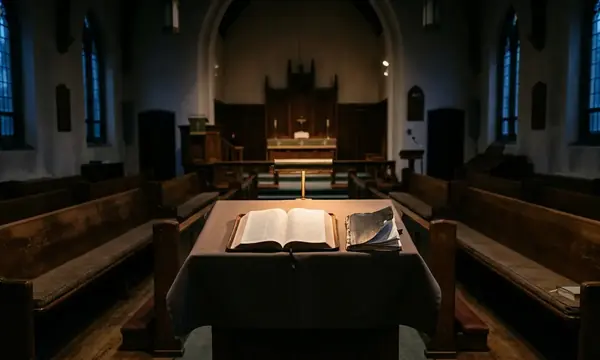
The first month holds when the body reaches the room before the feelings catch up. Newcomers commonly wait until they feel together enough to walk in, and that wait stretches from a hard week into a whole season. Impact Ministries builds the opening thirty days around attendance. The chair comes first. Emotional readiness can show up later, if it shows up at all.
Three commitments cover the month.
Show up for four consecutive weekly gatherings. Listen before anyone expects a story. Keep one daily point of contact: a short call or text with one same-gender attendee who has agreed to take it. A two- to five-minute check-in is typical. Each of these can be done while life is still fractured. A polished testimony is not required to start.
Four weekly gatherings land in a window of roughly 28 to 31 days, depending on the starting date. That span is long enough to sit through at least one full rotation of teaching nights and testimony nights in the Large Group. In Wheatland the pattern is four Tuesday-style repetitions of the same path: the welcome table, worship and the lesson, then a pass-allowed seat in the men's or women's Open Share circle.
Celebrate Recovery is a Christ-centered program built on eight recovery principles drawn from the Beatitudes in Matthew 5, paired with the Twelve Steps and their biblical comparisons. The Celebrate Recovery national program guidelines describe the scope as hurts, habits, and hang-ups. Grief belongs in the room. So do anger, codependency, anxiety, unhealthy relationships, pornography, overeating, and control issues. Substance dependency sits inside that same list. A close-knit church community needs the wider door, because the weight that walks into a Wheatland gathering is often relational, habitual, and quiet.
Four Straight Weeks
The month-one plan is repetition. Four gatherings, ears open, one daily check-in. The feelings are allowed to lag behind the feet.
A person can carry a habit through calving season, a hurt through a long marriage, or a hang-up through years of Sunday attendance and still start with those three commitments. Church leadership does not put a newcomer on the spot for a public confession on night one. These ministries exist so someone can be present while still unsteady. Willpower speeches can wait until the chair has been used four times.
How a First Night Actually Moves
A first visit follows the building, not a mood. The welcome table comes first. Large Group comes next. A gender-specific Open Share, or Newcomers 101 on night one, comes after that. Knowing the order keeps a newcomer from freezing in the lobby.
Large Group, Then the Split
Large Group usually runs 45 to 60 minutes. It opens with a welcome, moves through several worship songs and announcements, then settles into either a teaching on one of the eight principles or a personal testimony. Sermons and teachings in that hour stay aimed at the principle for the night. Nobody is called out of the chairs to perform.
After that hour the room splits. Men's and women's Open Share groups typically last another 45 to 60 minutes. Many ministries close with an informal coffee-and-dessert fellowship. That last stretch is optional conversation. It is not a second meeting with a hidden attendance sheet.
Newcomers 101 on Night One
First-time visitors are typically directed from the welcome table into Newcomers 101 instead of an Open Share group. A trained leader explains the program, the eight principles, and the meeting flow, then answers questions. The handoff decides the seat. There is no hunt for the right circle and no need to invent a share on the spot.
Week two is when Open Share becomes the regular landing place. By then the songs, the announcements, and the split after teaching are familiar. The path runs from orientation, to observation, to a short share once the words are actually there. Watching the room for a month is a valid way to learn how these gatherings work.
Five Rules That Keep the Circle Safe
Open Share runs on five guidelines. They are the reason a quiet newcomer can stay in the circle without being managed by it.
- Keep the share on your own thoughts and feelings, and keep it to about 3 to 5 minutes.
- There is no cross-talk. Members do not respond to, interrupt, or comment on another person's share.
- The group is there to support one another, not to fix one another.
- Anonymity and confidentiality are basic requirements. What is shared in the group stays in the group. The exception is when someone threatens to injure themselves or others.
- Offensive language has no place in a Christ-centered recovery group.
Passing Counts
Saying "pass" when the circle reaches you is expected in the first month. Leaders treat a pass as participation. The chair was the commitment — the story can wait.
Once the month is underway, a useful next skill is listening for the principle inside other people's shares without turning that listening into advice. Guidelines 2 and 3 exist so the circle stays a place of witness. The advanced move, early on, is to leave other people unfixed.
Familiar Faces in a Platte County Room
Will a neighbor, a coworker, or someone from Sunday morning be in the chairs? In a county with fewer than ten thousand residents, recognizing someone is close to certain. The useful question is what that recognition is allowed to do once the night ends.
Some anxious newcomers try a meeting in a larger city an hour or more away, hoping distance will solve the awkwardness. The drive costs a weeknight and pulls recovery out of the church family that already holds the rest of life. The local path is the one that fits Wheatland: learn how confidentiality works at Impact Ministries, and practice it.
The line repeated in many Celebrate Recovery groups is plain. "Who you see here, what you hear here, when you leave here, let it stay here." That sentence binds every person in the room, including the Platte County neighbor who already knows a last name. Group leaders enforce the guidelines in the moment. If cross-talk, gossip, or naming someone outside the group occurs, they gently redirect. Repeated violations are handled privately with the leader after the meeting.
Seeing a coworker or a fellow church member at a gathering leaves both people under that same line. Work, the grocery store, and a Sunday hallway conversation are not places to mention who attended. Even a nod of recognition outside the meeting is left to the newcomer's lead.
Confidentiality governs what group members say. It cannot prevent a neighbor from noticing a vehicle in the church parking lot on meeting night, so decide the one-sentence answer to "I saw your truck at Impact" before the first visit.
Truck In The Lot
Pick the sentence on the drive over, not in the produce aisle. A workable line is short: "I was at a church gathering. It was good to be there." Then stop. No names from the circle. No tour of the night.
What to Tell the People at Home
Curious relatives get a bounded script. "I've started going to a Tuesday-night group at church that helps me deal with some things I've been carrying. It's been good for me, and I'll share more when I'm ready." Substitute the actual night if the calendar differs. The line names the gathering and keeps the inventory off the kitchen table until the speaker is ready.
A skeptical spouse needs a different script, one that keeps the marriage from becoming the subject of the night. "I'm not going because of you, and I'm not going there to talk about you. I'm going to work on me. I'd like you to come to a Large Group night sometime if you're willing."
Spouses and family members may attend the Large Group portion. Open Share remains gender-specific, and attendees speak only about their own experience. That boundary keeps a household argument from being retried in the circle. Sunday worship and other community events stay separate from what was said after the split. Church leadership expects the hallway to follow the same rule the circle follows.
Ten Minutes That Fit a Wheatland Day
Calving season, irrigation, early shifts, and overtime leave little room for a long devotional block. The between-meeting routine was sized to those days and capped at ten minutes so it can fit before a shift, at a lunch break, or in a parked pickup. Ten minutes is short enough that missing it once does not feel like failing the month.
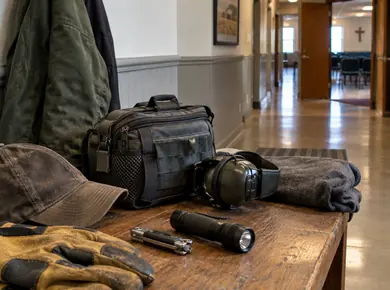
The Celebrate Recovery participant guides and the Recovery Bible work here as daily stabilization tools. Treat them the way a morning equipment check works: short, repeated, and finished before the real labor starts. Nobody at the welcome table grades the pages.
The participant guide series has four books covering the eight principles: Stepping Out of Denial into God's Grace; Taking an Honest and Spiritual Inventory; Getting Right with God, Yourself, and Others; and Growing in Christ While Helping Others. The Celebrate Recovery Bible includes recovery-focused study notes, devotionals aligned with the eight principles, and lessons placed alongside the relevant Scripture passages. In month one, one short section is enough. Finishing a book is a later aim.
A Partner This Month, a Sponsor After Step Study
An accountability partner belongs to the first weeks. This is a same-gender attendee, often one of two or three people forming an accountability team. They are available for encouragement and honest check-ins and can be found while a newcomer is still learning the room, often near the coffee table after Open Share. The daily point of contact is that person.
A sponsor is chosen later, typically once a newcomer joins a Step Study group. Step Study is a closed, multi-month commitment that often runs 9 to 12 months. A sponsor guides the inventory and the step work personally. Waiting for that relationship lets a newcomer watch how people actually walk the principles before asking someone to carry the deeper work.
Three Moves, Ten Minutes
The routine has a fixed order so it survives a rushed morning.
- Three to four minutes: read one devotional or one short lesson section.
- Two to three minutes: pray, using the Serenity Prayer or a plain-spoken prayer about the day ahead.
- Three minutes: text or call the daily contact with two questions. "How am I really doing?" and "What's one thing I'm facing today?"
Before the Shift
Set the workbook, the Bible, and the phone in the same spot the night before. Morning window light and a mug are enough setup. The routine holds when the tools are already on the table.
Ranching schedules, shift work, and family mornings in Wheatland all bend. The ten minutes stay put. A parent can run the three moves after the kids leave for school. A night-shift worker can run them in the cab before clock-in. The text is the piece with a witness. Reading and prayer steady the day; the contact hears whether the day is actually honest.
When a Tuesday Gets Missed
Perfectionism turns one absence into a disappearance. A slip, a missed week, or an emotional outburst during Open Share is information about the week. The program describes recovery as a lifelong process grounded in grace, so a stumble during the first thirty days does not close the circle.
A person's standing in Christ is not revoked by a behavioral stumble, and the next step is honesty with an accountability partner within 24 hours. That separation of identity and behavior is the program's framing for these opening weeks, and it is how a returning person is received in Large Group and Open Share at Impact Ministries.
Many Celebrate Recovery ministries offer recognition chips at regular intervals. A first or surrender chip is often available to anyone willing to start or restart, with no waiting period after a relapse. Taking one is a restart the room already knows how to honor.
A returning attendee who missed one to three weeks walks back into the same Large Group and Open Share without re-orientation. No explanation is required in the group. Principle 6, on evaluating relationships, offering forgiveness, and making amends, and Principle 7, on reserving a daily time with God for self-examination, treat ongoing struggle as an expected part of recovery. The work assumes the struggle continues. The chair stays open.
Sunday worship, other community events, and the next Celebrate Recovery gathering can share a calendar again the following week. The meeting structure is built for a quiet return. A familiar face in the same seat teaches the room more than a perfect record ever could.
The next action is physical and singular. Walk through the doors of Impact Ministries for the next scheduled Celebrate Recovery gathering ten minutes before start time and introduce yourself to the greeter at the welcome table. Those ten minutes cover parking, a first name, and a seat before worship begins.