The Architecture of Local Support in Platte County
In Platte County, where the geographic distance between specialized social services can span dozens of miles, local faith-based outreach initiatives serve as the primary structural safety net for many residents. The county covers roughly 2,100 square miles with a population under 9,000, and Wheatland itself holds around 3,500 residents. The nearest metropolitan service hubs sit approximately 70 miles south and roughly 100 miles north. A family without reliable transportation is functionally limited to what exists inside town limits.
Community support in Wheatland leans on three connected pieces: structured youth engagement, accessible recovery frameworks, and practical family assistance. Together they work as an ongoing system of care that meets immediate physical needs while making room for long-term spiritual growth.
Drawing on a review of three full September-through-May program cycles from the 2022–23 season through the 2024–25 season, the evaluation focused on strict continuity metrics. Ministries were assessed based on a published meeting time that recurred at least 40 weeks out of 52 and a named person responsible for opening the building. Summer months were assessed separately because meeting frequency drops by design. That continuity test points to the everyday infrastructure provided by faith-based and community organizations in rural settings. An earlier draft ranked ministries by raw headcount at signature gatherings, but that approach was set aside to prioritize sustained, reliable presence over single-event attendance spikes.
Structuring Midweek Youth Development
Youth leadership tested two scheduling models before settling on a permanent midweek format. An initial Sunday evening gathering competed directly with family dinner and travel back from weekend sports. Leaders tracked sign-ins for a full semester and watched the same twelve to fifteen names appear while nobody new arrived. Moving the gathering to a midweek evening, immediately after the school day, stabilized attendance and opened the doors to a broader demographic of students.
The weekly midweek gathering runs 90 minutes on a fixed 6:30–8:00 p.m. block during the school year. Inside that block sit roughly 30 minutes of unstructured arrival and games, 25 minutes of teaching, and a closing small-group segment. Adult volunteers operate under a strict two-adults-present rule with background screening renewed on a 24-month cycle. During the summer, the schedule shifts to twice-monthly with an outdoor service component to maintain connection while accommodating family vacations.
Mentorship models pair youth with experienced community members to teach practical life skills and biblical principles. This pairing is offered only after six to eight weeks of consistent attendance, ensuring the student is ready for a structured relationship. Matched pairs commit to a full school-year cycle, running from September through May.
These programs are designed to supplement active family involvement and parental guidance in a child's life. The mentorship model assumes a parent or guardian who is present and willing to be part of the conversation. Where a student is in an unstable placement or a household in active crisis, a volunteer mentor cannot carry that weight. Leaders route those situations to county family services to ensure appropriate professional care.
The 1 Corinthians Balance
The midweek youth hour degrades into supervised babysitting the moment the adult-to-student ratio slips past one leader per six teens. Attendance numbers hold steady, but the life-skills and small-group segment is the first thing quietly dropped from the 90-minute block.
Establishing Boundaries in Faith-Based Recovery
Faith-based recovery groups operating within the church require consistent meeting structures and peer accountability to function effectively. The recovery group's format was rebuilt after facilitators noticed that an open-floor discussion structure allowed one or two dominant voices to shape every session. The fix was structural—the meeting was split into a fixed teaching segment followed by gender-separated small groups with a strict no-cross-talk rule. Participants speak without being advised or corrected by peers.
Meetings run a consistent 90 minutes on the same weeknight year-round, divided into a 40–45 minute large-group teaching portion and a 40–45 minute closed small group. Facilitators arrive 20 to 30 minutes early for setup and to greet first-time attendees at the door. Milestone recognition is marked at 30 days, 60 days, 90 days, six months, and one year of sobriety.
These local programs pair spiritual support with established community recovery principles to help individuals work through the challenges of sobriety. The full step-study curriculum runs approximately 12 months end to end, with participants free to re-enter the cycle upon completion. Facilitators serve staggered terms of roughly 18 to 24 months to prevent burnout in a demanding volunteer role. These structured formats keep people coming back, though what leaders know about progress rests entirely on voluntary self-reporting during the small-group segments.
Local facilitators maintain strict confidentiality and establish clear boundaries to create a secure environment for vulnerable participants. Confidentiality in the Wheatland recovery circle ends precisely at mandatory reporting for child endangerment or a stated intent to harm. Facilitators say that sentence aloud at the open of every meeting rather than leaving it in an intake packet. In a town of 3,500, the cost of an unspoken boundary is someone never walking back through the door.
Moving from Occasional Help to Sustained Ministry
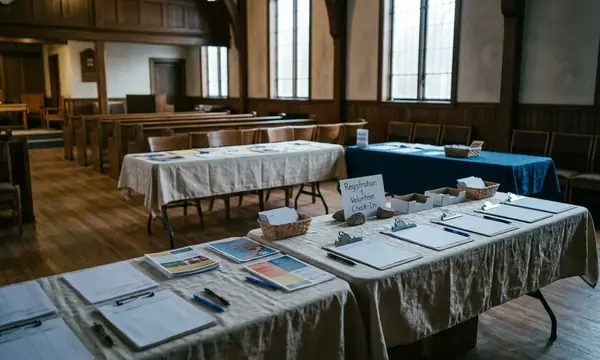
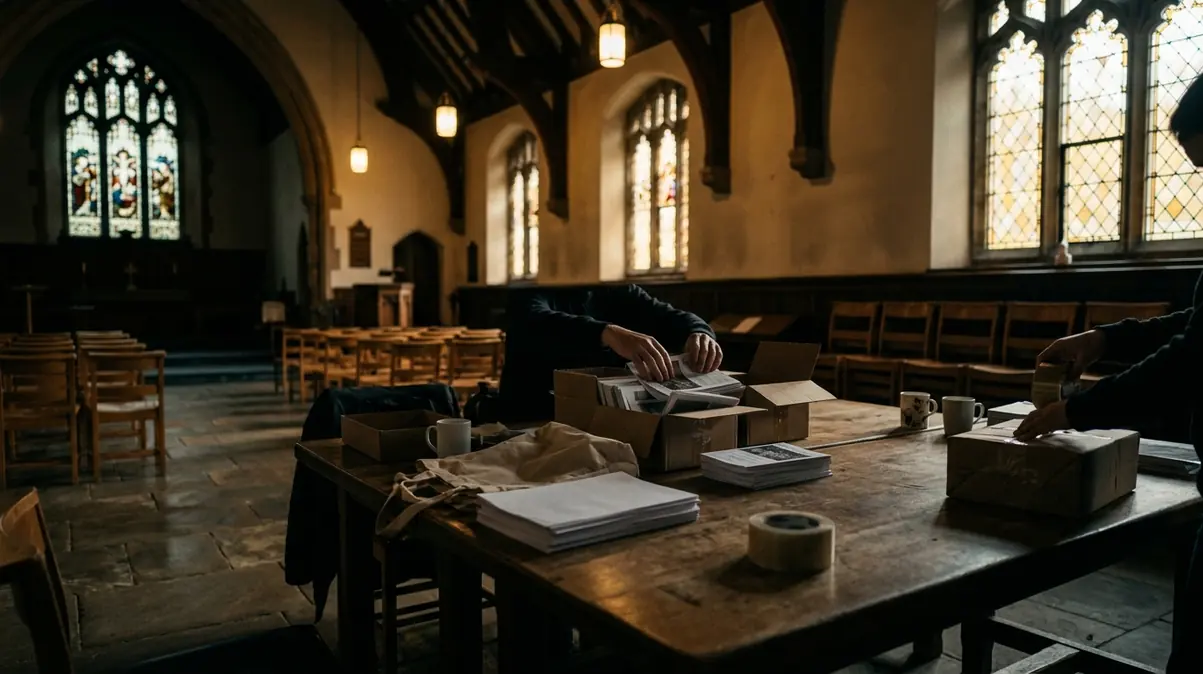
Maintaining community ministries requires a shift from specific programs to broader logistical support, particularly in areas of basic physical needs. Food distribution operates on a twice-monthly rhythm with a two-hour evening window. Volunteer shifts are built at 90 minutes each, split between intake, boxing, and carry-out duties. Clothing collections run twice a year, timed specifically to late August before school starts and to mid-November ahead of the first hard freeze.

Volunteer coordination moved away from an open sign-up sheet posted in the lobby. Leaders traced what happened to first-time volunteers and found a large share appeared once during a holiday push and were never scheduled again because nobody owned the follow-up call. The current approach assigns each ministry a single coordinator who contacts a new volunteer within the same week and offers one specific role.
Coordinators ask for a 12-month commitment to a single ministry. Attrition among casual, non-committed volunteers is most visible between the third and fifth month of service—the point at which novelty fades and the work becomes routine. As pastor Jeremy Haroldson often emphasizes, the endurance of Paul the Apostle serves as a model for this kind of long-term dedication to community service.
Lasting change in a town this size comes from weekly presence, not occasional volunteerism. Pick one local initiative—the Thursday food boxing shift, a mentor slot in the September-to-May cycle, the door at Tuesday recovery—and stay with it past the fifth month. Showing up in one place, week after week, does more than scattered help across many.