Showing Up Unpolished: Why Presence Beats Preparation
Walking through the doors of a new church building carries a specific kind of weight. People often spend their Saturday nights worrying about unwritten cultural rules or dress codes. They wonder if they will stand out for the wrong reasons or fail to grasp the local etiquette. Drawing on visitor feedback, the pastoral team found a clear pattern. Emphasizing an unpolished presence over formal expectations seemed to reduce newcomer anxiety.
First visits tend to go more smoothly when attendees prioritize authentic presence. Community ministries in Wheatland are designed for immediate, low-barrier participation. The main sanctuary doors are unlocked and staffed by greeters shortly before the service. You walk in, and the process begins naturally. Initial youth orientations take somewhere in the ballpark of 3 to 5 minutes upon first entry to the building.
Understanding basic arrival logistics, knowing the youth integration process, and managing personal expectations can make a visit easier. Just as Paul the Apostle met communities where they were, we ask you to bring your actual self to the gathering. This approach strips away the performance aspect of church attendance. You can focus entirely on the message and the people around you. The environment encourages you to leave your polished exterior in the car. We want to interact with the real you, complete with whatever challenges or questions you bring to the table.
Timing Your Arrival and Navigating Wheatland Gatherings
People frequently ask exactly when they should pull into the parking lot. The hospitality committee initially considered recommending a 30-minute early arrival for newcomers. They discarded this approach because it frequently resulted in visitors waiting awkwardly in an empty foyer before volunteers were in position. You should aim to arrive within a 7 to 12-minute window before the scheduled start time. This gives you enough time to secure seating without feeling rushed.
That window balances preparation and participation. Navigating Platte County winter overflow parking logistics requires a bit of planning during the colder months. The gravel overflow parking lot on the south side of the building accommodates up to 40 additional vehicles during peak winter months. Wyoming weather demands practical attire. Functional, comfortable clothing is appropriate for both Sunday services and weekday community meals.
You will be greeted at the door and directed into the main event space. The flow is straightforward and removes the anxiety of the unknown. We recognize that stepping into a new space takes courage. Our volunteer teams focus on making that transition as easy as possible. They provide clear directions to the sanctuary, the restrooms, and the children's areas. You will never have to guess where you need to go next.
Arrival Preparation Steps
- Verify the start time of the specific gathering on the community board.
- Plan arrival for the 7 to 12-minute pre-service window.
- Dress in functional, weather-appropriate Wyoming attire.
- Locate the south side gravel overflow lot during winter months.
Securing Your Kids in Ministry Programs
Bringing children to a new environment requires trust. The children's ministry directors structured the check-in process by mapping the physical flow of the lobby. They ensured the registration kiosk was positioned away from the main sanctuary doors to prevent bottlenecking. The initial family registration profile takes between 4 and 6 minutes to complete at the digital kiosk.
Safety remains the primary focus. Parents receive a randomized alphanumeric security tag that must be presented to the classroom teacher before a child is released. This system provides a consistent layer of security for every family. While this baseline registration timeline holds true for standard check-ins, families coordinating specific medical or behavioral accommodations should allow on the order of ten additional minutes for a private classroom orientation.
The children's areas feature age-appropriate activities and clear supervision structures. Every volunteer plays a specific role in this ministry, reflecting the principles found in 1 Corinthians 12 where every part serves the whole. Some parents prefer to keep their children with them during the main gathering. We affirm this as a valid and supported choice. Your family needs to worship in the way that feels most secure. The teaching teams design their lessons to engage children at their specific developmental stage. They use interactive storytelling and hands-on activities to communicate core biblical truths.
Stepping Into Recovery and Support Circles
Specialized recovery support gatherings carry a different tone than general community events. Facilitators arranged the recovery meeting spaces by removing standard rows and implementing circular seating. This visually reinforces that all participants, including leaders, share equal footing in the recovery journey.
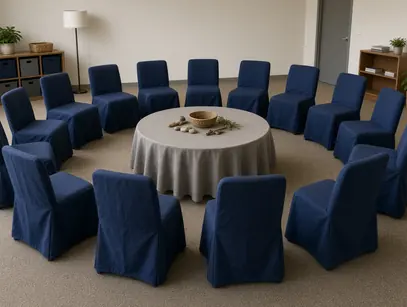
Each seat in the recovery circle is provided with a printed step-study workbook and a list of local Platte County mental health resources. Standard recovery group sessions run for 50 to 55 minutes to respect participants' evening schedules. Active listening is just as acceptable as sharing your own story. You participate at your own pace.
We maintain strict confidentiality protocols and closed-door policies during designated recovery group sessions. Public community meals are not covered by those closed-door confidentiality protocols, as the meals operate under public, open-door guidelines. Pastor Jeremy Haroldson often emphasizes the importance of these distinct boundaries for creating safe spaces. The recovery environment demands a high level of vulnerability. We protect that vulnerability through clear, consistent rules of engagement. Everyone in the room understands the expectations before the session begins.
The 21-Day Community Assessment Plan
Never judge a church community based on a single Sunday service. The leadership board developed the three-event evaluation strategy after observing that individuals who attended a mix of weekend services and weekday volunteer events integrated into the community faster than Sunday-only attendees.
Commit to attending three distinct types of gatherings—a Sunday morning service, a Wednesday evening community meal, and a local outreach project. Complete these three visits over a 14 to 21-day period to maintain momentum in building relationships. Community dynamics become clearer when you observe how the group interacts across different contexts and service opportunities. Make your decision after you have seen the community at worship, at rest, and at work.